On the very best days, the writing feels exactly like this...
The Tallis Scholars sing Thomas Tallis... Heard this on the radio the other day and was so struck by its beauty, I came straight home and purchased the CD. But only because there was no download available. Enjoy.
Sunday, April 10, 2011

Saturday, April 09, 2011
NaPoMo QOTD What? It's Still Classy If It Can Mean Two Things...
"Syntax, like sex, is intimate."
- A Calling by Maxine Kumin* (PoLau '81-'82)
Syntax is deeply personal. I take great care to say exactly what I mean, especially when I write. (Seriously, totally not kidding when they say that once it's there, it's on the internet forever. That's alot of pressure.) After suffering a serious concussion, it was very hard for me to land on the exact word I wanted to use. People drove me insane inserting their own suggestions like some hyper-relevant game of Mad Libs. They would usually get gist of what I was trying to say, but I wanted the word I was thinking of. Not just any old nuance and sound. It's the difference between hate and loath, or otolaryngologist and ear, nose, and throat doctor. I mean, can you imagine if the first line of Elizabeth Bishop's "One Art" was "learning to misplace stuff is easy"? Only you can land on the perfect expression of what you mean, whether that's music, art, writing, dance. It's the unapologetic and courageous contact with that inherent intimacy that sets apart great art in any field.
Today is the anniversary of the opening of the first public library. For me, reading is an intensely personal experience. I make weird faces when I imagine characters' accents and I laugh and commentate what I'm reading. I love getting caught up in a wholly separate world that is different than how anyone else imagines it. Even though in some ways you're sharing the experience with everyone else who's read that book or poem, it is simultaneously a completely different and singular journey just for you.
So, there you have it. A definitive explanation of how reading poetry is kind of like watching a peep show. Intimate and communal, detached and visceral.
*From The Poets Laureate Anthology , published by W.W. Norton in association with the Library of Congress. Poem copyright Maxine Kumin.
- A Calling by Maxine Kumin* (PoLau '81-'82)
Syntax is deeply personal. I take great care to say exactly what I mean, especially when I write. (Seriously, totally not kidding when they say that once it's there, it's on the internet forever. That's alot of pressure.) After suffering a serious concussion, it was very hard for me to land on the exact word I wanted to use. People drove me insane inserting their own suggestions like some hyper-relevant game of Mad Libs. They would usually get gist of what I was trying to say, but I wanted the word I was thinking of. Not just any old nuance and sound. It's the difference between hate and loath, or otolaryngologist and ear, nose, and throat doctor. I mean, can you imagine if the first line of Elizabeth Bishop's "One Art" was "learning to misplace stuff is easy"? Only you can land on the perfect expression of what you mean, whether that's music, art, writing, dance. It's the unapologetic and courageous contact with that inherent intimacy that sets apart great art in any field.
Today is the anniversary of the opening of the first public library. For me, reading is an intensely personal experience. I make weird faces when I imagine characters' accents and I laugh and commentate what I'm reading. I love getting caught up in a wholly separate world that is different than how anyone else imagines it. Even though in some ways you're sharing the experience with everyone else who's read that book or poem, it is simultaneously a completely different and singular journey just for you.
So, there you have it. A definitive explanation of how reading poetry is kind of like watching a peep show. Intimate and communal, detached and visceral.
*From The Poets Laureate Anthology
, published by W.W. Norton in association with the Library of Congress. Poem copyright Maxine Kumin.
Friday, April 08, 2011
Quotes from a Disaster
Posted a short fiction/prose-poem piece at Red Room this morning, inspired by the following words from Matsuto Ito, a 64-year-old tsunami survivor in Natori, Japan:
"Something has changed. The world feels strange now. Even the way the clouds move isn't right."
Jerusha's poetry-posts were another catalyst. Thank you, Jerusha.
You can read the full post here.
--MD
"Something has changed. The world feels strange now. Even the way the clouds move isn't right."
Jerusha's poetry-posts were another catalyst. Thank you, Jerusha.
You can read the full post here.
--MD
NaPoMo QOTD This Is Mostly Because Nemerov Sounds Like An Alien From Star Trek
"Even so, for these two books...
Are not so wholly lost as certain works
Burned at Alexandria, flooded at Florence,
And are never taught at universities."
- Style by Howard Nemerov* (PoLau '63-'64, '88-'90)
I won't lie to you, I picked Howard Nemerov to quote today almost entirely because his name sounds like some lost cousin of Spock. It's awesome. He seemed like a legitimately cool guy, though. He had a really down to earth attitude about life and about poetry. His idea was to make you smile first and think second. I like that. I think there's this huge misconception that potry has to be weighed down with super think-y thoughts because it's a poem. Well, and because that's what gets taught at universities. They should teach some Nemerov in English 101. Scratch that. They should teach some Nemerov in middle school, before poetry gets ruined for kids.
*From The Poets Laureate Anthology, published by W.W. Norton in association with the Library of Congress. Poem copyright Howard Nemerov.
Are not so wholly lost as certain works
Burned at Alexandria, flooded at Florence,
And are never taught at universities."
- Style by Howard Nemerov* (PoLau '63-'64, '88-'90)
I won't lie to you, I picked Howard Nemerov to quote today almost entirely because his name sounds like some lost cousin of Spock. It's awesome. He seemed like a legitimately cool guy, though. He had a really down to earth attitude about life and about poetry. His idea was to make you smile first and think second. I like that. I think there's this huge misconception that potry has to be weighed down with super think-y thoughts because it's a poem. Well, and because that's what gets taught at universities. They should teach some Nemerov in English 101. Scratch that. They should teach some Nemerov in middle school, before poetry gets ruined for kids.
*From The Poets Laureate Anthology
, published by W.W. Norton in association with the Library of Congress. Poem copyright Howard Nemerov.
Smitten
Sometimes, I'll know for many months before finishing one project what my next will be. Other times, I may know, logically, what I *ought* to do, but there's a glimmer of light on the horizon, a colorful flash that makes the word "ought" sound awfully onerous.
Since colorful flashes don't come along every day, I stop to investigate, to play around a little with the notion. Joni calls this "dating an idea." Lots of times, the literary equivalent of the one-night stand doesn't work out. The idea proves itself to thin, impractical, or ridiculously unmarketable to sustain a novel. Or it doesn't fit in with my "laser-like focus" strategy of creating an evolving but recognizably-cohesive body of work.
And other times, one simply falls in love, as I have over the course of the past two months with a new project in a new-to-me (sort of, since it has elements of several old favorites) genre. I'm finding myself willing to take risks because it's such a pleasure remembering what it's like to be utterly transported by a story that has nothing to do with deadline commitments or previous career plans. Giving myself over to this "torrid affair," I eventually find myself hoping it might turn out to be a long-term commitment.
Whether or not it does, it's at least served to remind me that for all my plotting charts, how-to books, and every craft lecture I've attended, an essential ingredient in the writing of all fiction is--or ought to be--magic, or maybe love really is as good a word as any. Whatever it is, I'll bring the gift of it to all my work, and return invigorated.
Thursday, April 07, 2011
How Did Collette and Truman Capote Organize Their Days?
The credit/blame/or thanks for my newest addiction goes to Laura Harrington, author of the upcoming (and recipient of a recent rave review from Joni) novel, Alice Bliss.
Daily Routines has searched through books, newspapers, magazines and websites to discover how writers, artists and other interesting folk organized their days. Two opposite ends of the spectrum:
Daily Routines has searched through books, newspapers, magazines and websites to discover how writers, artists and other interesting folk organized their days. Two opposite ends of the spectrum:
Anthony Trollope
Every day for years, Trollope reported in his “Autobiography,” he woke in darkness and wrote from 5:30 a.m. to 8:30 a.m., with his watch in front of him. He required of himself two hundred and fifty words every quarter of an hour. If he finished one novel before eight-thirty, he took out a fresh piece of paper and started the next. The writing session was followed, for a long stretch of time, by a day job with the postal service. Plus, he said, he always hunted at least twice a week. Under this regimen, he produced forty-nine novels in thirty-five years. Having prospered so well, he urged his method on all writers: “Let their work be to them as is his common work to the common laborer. No gigantic efforts will then be necessary. He need tie no wet towels round his brow, nor sit for thirty hours at his desk without moving,—as men have sat, or said that they have sat.”
The New Yorker, June 14, 2004
W. H. Auden
Perhaps the finest writer ever to use speed systematically, however, was W. H. Auden. He swallowed Benzedrine every morning for twenty years, from 1938 onward, balancing its effect with the barbiturate Seconal when he wanted to sleep. (He also kept a glass of vodka by the bed, to swig if he woke up during the night.) He took a pragmatic attitude toward amphetamines, regarding them as a "labor-saving device" in the "mental kitchen," with the important proviso that "these mechanisms are very crude, liable to injure the cook, and constantly breaking down."
John Lanchester, "High Style," The New Yorker, January 6, 2003
NaPoMo QOTD Louise Glück Doesn't Want You to Know About This Poem. Doesn't That Make You Want to Read It?
"...stars everywhere, like in the river, though these were the real stars,
even the dead ones were real.
But the ones in the river-
...not real, maybe, but somehow more lifelike."
- At the River by Louise Glück* (PoLau '03-'04, Special Bicentennial Consultant in Poetry '99-'00)
Louise Glück is one of my favorite poets. She writes beautifully. I had an incredible amount of respect for her prior to this project, but I must confess, it has waned. I didn't know anything about her, just that I loved her poetry. Now I know that she refuses to do interviews, promote poetry, and she used to refuse to eat. I am mildly offended that she has described herself as having "no concern with widening audience." Maybe I shouldn't have included her at all in this, but I think that poetry is more important than the poet, so I did.
Although Glück is disgusted by the idea of gaining popularity, her poetry needs to be read. I think that she is disrespecting her work and simultaneously shirking her most basic duty as a Poet Laureate. Even if she doesn't want any interlopers reading her poems, she should still encourage the reading of poetry as a whole. The fact that she thinks her personal feelings (read: insecurities) about her own work trumps the life of the poem is absurd and self-centered. If you give a poem to the world, give it to the world. Don't be greedy with your words. I had a theater professor, Mrs. Mac, that gave me the best piece of writing advice. (She meant it for acting, but cross-application is great.) She said, "Rip your heart out, and while it's bleeding, show it to the audience." The part she didn't say is that, the audience is looking at you. They're looking at your heart. Louise Glück needs to hear that, I think. In the meantime, go read her poetry. Even though she doesn't want you to.
Homework Assignment:
Share something. Anything. A poem. A story. Your car. Whatever. Just open yourself up a little bit.
*From The Poets Laureate Anthology, published by W.W. Norton in association with the Library of Congress. Poem copyright Louise Glück.
Wednesday, April 06, 2011
NaPoMo QOTD A Good Woman Poet is Apparently Hard to Find
"Where what breathes, breathes
The restless wind of the inlets,
And what drinks, drinks
The incoming tide"
- Night by Louise Bogan* (PoLau '45-'46)
Let me preface this by saying I have had the pleasure of reading some wonderful poetry by women and the privilege of taking classes from them, as well. So, when I say a good woman poet is hard to find, I mean that must be the case according to the Librarians of Congress. Louise Bogan was the woman behind the Library's massive project to record twentieth century poetry. (Most PoLaus have continued this project through their terms, adding to the collection.) She was the first of her kind. A woman Consultant in Poetry.
Of 43 Poets Laureate, there have only been 10 women. Seriously, what's up with that? We constitute more than half the population of America. So why do we represent less than 25% of the PoLaus. It's ridiculous.
Dear Future Librarian of Congress,
Please amend this mathematically stupid situation at your earliest convenience.
Thank You,
Women and Poetry
*from The Poets Laureate Anthology, published by W.W. Norton in association with the Library of Congress. Poem copyright Louise Bogan.
The restless wind of the inlets,
And what drinks, drinks
The incoming tide"
- Night by Louise Bogan* (PoLau '45-'46)
Let me preface this by saying I have had the pleasure of reading some wonderful poetry by women and the privilege of taking classes from them, as well. So, when I say a good woman poet is hard to find, I mean that must be the case according to the Librarians of Congress. Louise Bogan was the woman behind the Library's massive project to record twentieth century poetry. (Most PoLaus have continued this project through their terms, adding to the collection.) She was the first of her kind. A woman Consultant in Poetry.
Of 43 Poets Laureate, there have only been 10 women. Seriously, what's up with that? We constitute more than half the population of America. So why do we represent less than 25% of the PoLaus. It's ridiculous.
Dear Future Librarian of Congress,
Please amend this mathematically stupid situation at your earliest convenience.
Thank You,
Women and Poetry
*from The Poets Laureate Anthology
, published by W.W. Norton in association with the Library of Congress. Poem copyright Louise Bogan.
Tuesday, April 05, 2011
Watch this movie: The Last Station
All, everything that I understand, I understand only because I love. Leo Tolstoy
 I love the Russian authors especially Leo Tolstoy and Anna Karenina
 is my favorite of the two of his novels I have read. War and Peace
 being the other one, the one that is sometimes described as the greatest novel ever written. It was the love of these books that led me to rent the movie, The Last Station
 , a 2009 biopic (widely available in 2010) about the last year of Tolstoy’s life. The movie is based on Jay Parini’s biographical novel of the same name
 and from the description of the movie, I assumed Tolstoy, himself, beautifully played by Christopher Plummer, would be the story’s focus, but for me, it was actually Tolstoy’s wife Sofia, played by Helen Mirren, who stole the show. Actually it was Helen Mirren’s performance as Sofia.
For me, this was the actual story’s focus, this personal, intimate battle that wages (or rages) between Sofia and her beloved Lyovochka (Sofia’s affectionate name for Leo Nikolayevich). They have always shared a great love for one another, albeit tempestuous at times, but Tolstoy, with his public calls for universal peace, chastity, women’s freedom, and the abolishment of private property, hardened through the years into a clear voice for the social reform that was such a prominent theme in his written work. At 82, when the movie begins, he’s become the Russian nation’s most famous utopian. The people revere him as a savior. His followers live in communes that could be prototypes for those that were prevalent in the 1960’s.“I don’t think he’s Christ,’’ says Tolstoy’s doctor (played by John Sessions). “Christ is Christ. I do believe he’s a prophet, though.’’ Sofia, on the other hand, has remained traditional. She married a count in a church. She was a countess and therefore entitled to the lifestyle to which she was accustomed. On a deeper, more emotionally affecting level, she felt she was losing Tolstoy to people who didn’t understand him, who only meant to use him to further their own fanatical beliefs. She goes to theatrical lengths to prevent this from happening. It is almost unbearable to watch her histrionics and yet your heart is torn for her, for her suffering.
Helen Mirren makes you see this, feel Sofia’s torment. Mirren’s performance is superb verging as it does on the melodramatic but with such exquisite precision, you can’t dismiss it as over the top. There is one scene where she crumples to the floor with as much grace and pathos as Anna Pavlova in her role as the dying swan. Mirren received many nominations for her portrayal of Sofia and won the Best Actress award at the 2009 Rome International Film Festival.
If you haven’t seen it, The Last Stationis worth watching for her performance alone.
I love the Russian authors especially Leo Tolstoy and Anna Karenina is my favorite of the two of his novels I have read. War and Peace being the other one, the one that is sometimes described as the greatest novel ever written. It was the love of these books that led me to rent the movie, The Last Station, a 2009 biopic (widely available in 2010) about the last year of Tolstoy’s life. The movie is based on Jay Parini’s biographical novel of the same name and from the description of the movie, I assumed Tolstoy, himself, beautifully played by Christopher Plummer, would be the story’s focus, but for me, it was actually Tolstoy’s wife Sofia, played by Helen Mirren, who stole the show. Actually it was Helen Mirren’s performance as Sofia.The story’s overarching conflict centers on a question of ownership: When it comes to Tolstoy’s work, to whom does it belong, his wife and family or the Russian people? Vladimir Chertkov, devoted friend and the leader of Tolstoy’s faithful followers, the Tolstoyans, are attempting to persuade Tolstoy to sign away all of his rights to his work, an agreement that would make most modern day authors cringe and one that causes Sofia great consternation and emotional distress. It’s hard not to sympathize with her, though, when you learn the facts: On the eve of their wedding Tolstoy handed Sofia his diaries chronicling his past sexual escapades. Undeterred by that oh-so-romantic gesture, she bore the man 13 children, five of whom died in childhood and in the midst of all this, she gave him the peace and quiet necessary to write two of the most important novels of the 19th century. And she managed the family’s financial affairs. But here’s the clincher, at least for me: In the early years of their marriage Sofia acted as her husband’s secretary and proofreader and in that capacity she copied by hand--yep, you read it right, she copied by hand!--War and Peace, no fewer than seven times from beginning to end! It’s a matter of fact, of record. And now the guy wants to sign away his rights and the income that sustains his family?!
, no fewer than seven times from beginning to end! It’s a matter of fact, of record. And now the guy wants to sign away his rights and the income that sustains his family?!For me, this was the actual story’s focus, this personal, intimate battle that wages (or rages) between Sofia and her beloved Lyovochka (Sofia’s affectionate name for Leo Nikolayevich). They have always shared a great love for one another, albeit tempestuous at times, but Tolstoy, with his public calls for universal peace, chastity, women’s freedom, and the abolishment of private property, hardened through the years into a clear voice for the social reform that was such a prominent theme in his written work. At 82, when the movie begins, he’s become the Russian nation’s most famous utopian. The people revere him as a savior. His followers live in communes that could be prototypes for those that were prevalent in the 1960’s.“I don’t think he’s Christ,’’ says Tolstoy’s doctor (played by John Sessions). “Christ is Christ. I do believe he’s a prophet, though.’’ Sofia, on the other hand, has remained traditional. She married a count in a church. She was a countess and therefore entitled to the lifestyle to which she was accustomed. On a deeper, more emotionally affecting level, she felt she was losing Tolstoy to people who didn’t understand him, who only meant to use him to further their own fanatical beliefs. She goes to theatrical lengths to prevent this from happening. It is almost unbearable to watch her histrionics and yet your heart is torn for her, for her suffering.
Helen Mirren makes you see this, feel Sofia’s torment. Mirren’s performance is superb verging as it does on the melodramatic but with such exquisite precision, you can’t dismiss it as over the top. There is one scene where she crumples to the floor with as much grace and pathos as Anna Pavlova in her role as the dying swan. Mirren received many nominations for her portrayal of Sofia and won the Best Actress award at the 2009 Rome International Film Festival.
If you haven’t seen it, The Last Station
is worth watching for her performance alone.
NaPoMo QOTD A Good Poem for a Bad Day
"'I shall create! If not a note, a hole.
If not an overture, a desecration.'"
- Boy Breaking Glass by Gwendolyn Brooks* (PoLau '85-'86)
Gwendolyn Brooks was the first African-American woman to hold the position of Consultant in Poetry. She used it as a time to open poetry up to people that are, I think, mostly ignored in that respect. Her workshop included gang members and she visited prisons regularly. I hope we get another PoLau that does that sort of thing. She even would invite young writers to her office to do informal readings and friendly lunches. Brooks didn't shy away from any subject that she felt was important and as a result of that, her writing has an honesty that is accessible to a huge audience of readers.
Today is rainy and windy and gross in Huntsville, Texas. And I walked to work. There was nothing better than sitting down and opening up my Anthology and reading some of Brooks' poems. I think I'll like them just as much in the sweltering summer and in the dead of winter. She's just that awesome.
*From The Poets Laureate Anthology, published by W.W. Norton in association with the Library of Congress. Poem copyright Gwendolyn Brooks.
If not an overture, a desecration.'"
- Boy Breaking Glass by Gwendolyn Brooks* (PoLau '85-'86)
Gwendolyn Brooks was the first African-American woman to hold the position of Consultant in Poetry. She used it as a time to open poetry up to people that are, I think, mostly ignored in that respect. Her workshop included gang members and she visited prisons regularly. I hope we get another PoLau that does that sort of thing. She even would invite young writers to her office to do informal readings and friendly lunches. Brooks didn't shy away from any subject that she felt was important and as a result of that, her writing has an honesty that is accessible to a huge audience of readers.
Today is rainy and windy and gross in Huntsville, Texas. And I walked to work. There was nothing better than sitting down and opening up my Anthology and reading some of Brooks' poems. I think I'll like them just as much in the sweltering summer and in the dead of winter. She's just that awesome.
*From The Poets Laureate Anthology
, published by W.W. Norton in association with the Library of Congress. Poem copyright Gwendolyn Brooks.
Claudia Sternbach's path to publication: It's Pub Day for the bouncing baby book!
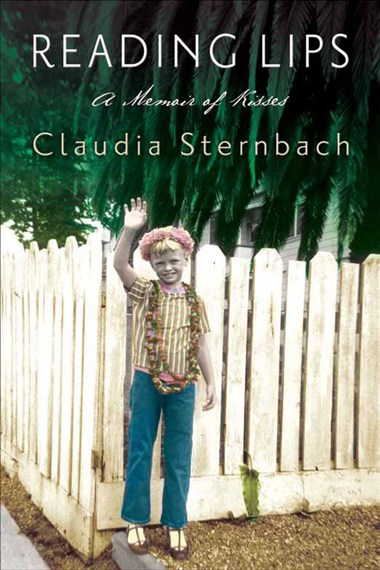
 . I inhaled it in one afternoon and wrote to her editor, "Reading Lips rings true and sweet as a music box. In a sea of memoirs based on big marketing hooks, Sternbach’s subtle theme is refreshing and, you come to realize, profound. Flawless pitch and balance. Guileless, unaffected writing. A book club’s dream date. I loved this perfect little opal earring of a book."
Yeah, that's blurbspeak, but I meant every word. And the Kirkus reviewer (for once)agrees with me:
Sternbach...is an impressive stylist and a candid guide through her life. Although the reality of kissing serves as the connecting thread, each essay is grounded in one of a wide variety of complementary topics, such as the first love as an adolescent, best friends, parents, sisters, birthdays, tennis, summer camp, air travel, marriage, divorce, cancer, rape and death—among others. Sternbach has carefully considered how to make a life story interesting through unusual yet approachable formatting, and she throws humor, sarcasm and self-deprecation into the mix. A memorable, laugh-out-loud, cry-out-loud essay collection for both genders and all ages.
Reading Lips: A Memoir of Kisses
is in stores today, and Thursday night, the book launches with an event on Manhattan's Upper East Side at Barnes & Noble, 86th and Lex, where Claudia will be introduced by none other than Jonathan Franzen. I so want this beautiful little book to be embraced by book clubs, gifted to sisters and friends, eaten with a spoon by anyone and everyone who's ever experienced the simple wonder of a kiss. Visit Unbridled Books to read an excerpt.I invited Claudia to share her path to publication with our readers, and she responded with a series of essays that have delighted and inspired all of us trying to make a go of this crazy business and life in general. Here's linkage to all six installments:
Part 1
Part 2
Part 3
Part 4
Part 5
Part 6
Congratulations, Claudia!
Monday, April 04, 2011
Reworking the "Rules" of Magic and Literature: Alexi Zentner on his Novel Touch

This February, I was delighted to meet several debut novelists at the Association for Writers and Writing Programs conference--among them, Alexi Zentner, whose elegiac and magical novel Touch officially debuts today. The novel has already received quite a bit of advance buzz, drawing praise from a wide range of writers, including Mary Lawson, Tea Obreht, and Lauren Groff. Today we welcome Alexi and congratulate him on the early success of Touch.
I was very excited to meet you at AWP and even more thrilled to hear about Touch. What can you tell us about the novel? It seems a very fresh concept, and I love how one reviewer brought up "The Brothers Grimm." What other kinds of images are in the book?
Touch is set in the fictional town of Sawgamet, a north-woods boomtown gone bust, where the cold of winter breaks the glass of the schoolhouse thermometer and the river freezes so fast it can trap the drowning. Stephen, a pastor, has brought his family home on the eve of his mother's death, thirty years after the mythic summer his grandfather returned in to raise his beloved wife from the dead. While the book has been called "haunting" and "eerie and elegiac," and Lauren Groff compared it to The Brothers Grimm saying Touch had a "sinister magic," for me, the book is, at its core, a love story. It's about the grandfather - who walked across the country, stole a dog from a witch, and then founded the town of Sawgamet - and his inability to let go of the woman he loves even though she is in the grave, and it's about Stephen and his own memories.
While the story is told in this incredibly harsh landscape, where I have the supernatural bumping against human heartbreak and loss, Touch is actually a really hopeful book. The monsters and myths in the story are sometimes one and the same, sometimes scary and sometimes simply part of Sawgamet. There are monsters like a dead man who won't stay dead, qallupilluit, wehtiko, mahaha, and then the wrath of the woods. But at the same time, there are also things that in another time and place might be miracles: a golden caribou, a river of water as sweet as syrup, trees that braid themselves together in love.
Your work has drawn comparison to Gabriel Garcia Marquez and other magical realists, yet you resist the term magical realism when describing your work. Can you tell us a little about what you're doing with the literary form here, how you're reinventing and reinterpreting the mystical for a different culture and era?
As much as I admire Gabriel Garcia Marquez - and reading his work was one of those moments in my life as a reader that changed everything - and other writers of magical realism, I've been using the term mythical realism because I am, I hope, doing something new and different. It might seem like I'm parsing a term, but the forms of magical realism - whether the central and south American versions or the European versions - are rooted firmly in their own place and traditions, and I think that taking those frameworks and just mapping them over our own landscape is problematic. When you do that, you end up with a palimpsest, where the ghostly traces of what you have borrowed always show through your own writing. You can create terrific work that way, but I was born and raised in Canada by American parents, and I've lived in the USA since college, so my own history dictates that I take a sort of oblique angle in terms of the way I look at my own cultures: by reworking national mythologies, I am, I hope, creating new work.
One of the things I've tried to do is weave the story in Touch with these myths so that the myths and magic are treated with the weight of reality, becoming an ongoing part of the characters' lives as opposed to single, solitary parlor tricks that are sprinkled through without purpose other than to raise amazement. Although, of course, I also hope to raise amazement. I should say, by the way, that I think there are a number of authors - my contemporaries - who are doing this, who are writing work that I'd call mythical realism, who are reworking the "rules" of magic and literature, even if they aren't calling it as such.
Can you tell us a little bit about how you came up with the ideas for the trailer, and what echoes of the book are present there? And how important is it for writers to develop a trailer for their books?
 I'm not sure that it's particularly important for writers to make trailers for readers. I personally tend to dislike book trailers: I'm a reader. But it's just another way to give people access to your novel, and I thought it wouldn't hurt, particularly if I could make a good trailer. We all write our books with the hope that they will get read, and if a trailer will help get the book read, that's great. I'm honestly not sure how much it has helped though. I've gotten a lot of compliments from people about the trailer, but I have a sneaking suspicion that it's mostly been watched by people who would have bought the book anyway. I actually have two trailers: one that I made myself, which is what we are talking about, and another one put together by Knopf Canada that features author Mary Lawson talking about Touch and the Knopf New Face of Fiction program.
The trailer with Mary Lawson is a more traditional "talking head" version, and it's lovely and a great endorsement for the book, but not everybody can call up a bestselling author who was in the running for the Man Booker and get them to praise their book in a video, and I didn't actually know it was in the works. I made my trailer ages ago, before I knew about the Mary Lawson one, and I decided ahead of time that I wasn't going to try to capture a literal rendering of the book, nor did I want to sit on my couch and talk about how awesome I am. My budget was zero, and because I wasn't sure about the efficacy of trailers, I didn't want to spend a ton of time on it, so I decided that I would just try to capture the mood of the book. Honestly, the video was just pure luck: there was this incredibly swooping, mass of birds circling the trees in a mesmerizing and terrifying pattern over the purpling sky, and I was able to get my phone out and record it. A little bit of time on iMovie and I slowed it down, played with the color a little, and put some of my blurbs on the screen.
I've been incredibly fortunate with my blurbs. I'd gotten several blurbs on my own - Tea Obreht, Lauren Groff, Philipp Meyer, Aryn Kyle, J. Robert Lennon, Josh Weil - and have since gotten even more from my publishers - Linden MacIntyre, Johanna Skibsrud, Beth Powning, and Chloe Aridjis - to the point where it is an embarrassment of riches, and with them all up at my website, plus starred reviews from Publishers Weekly and Quill & Quire, even I am starting to believe the book is good. But the hardest part with the trailer was the music. Again, I was really lucky. I was a waiter at Bread Loaf with an amazing musician, Alicia Jo Rabins, who was willing to let me use a song from her band, Girls In Trouble that I thought really spoke to the tone and mood I was going for. I do think, overall, the trailer captures some of the tone of the book. I hope. But when all is said and done, I don't think trailers are essential. I wouldn't recommend doing one unless you can do a good one, but I also don't think writers should spend much - or any - money on developing them. I guess the question writers should ask themselves is, would I watch it?
Thanks so much for your time. Now, standard BtO bonus question: What book(s) are you currently reading? And are you a one book at a time reader, or do you read several at once?
I'm currently reading The Beginners, by Rebecca Wolff (June 2011, Riverhead). I've got a daughter in first grade and another one in third grade, and I can't quite handle reading more than one book at a time right now.
NaPoMo QOTD Extra! Extra! Poetry Is For Sporty Boys, Too! But, No, Really...
"Teams in grey deploy through sunlight.
Talk it up, boys, a little practice.
Coming in stubby and fast, the baseman
Gathers a grounder in fat green grass..."
- Cobb Would Have Caught It by Robert Fitzgerald* (PoLau '84-'85)
Poetry is for everyone. The star QB, the choir nerd, the AV kid, that little old lady down the street and gaggle of grandkids. I hate that so many teachers over the years have made poetry some tortured topic or made it bearable by teaching music lyrics instead of poetry like this. Poems can be strange and hard to understand (E.E. Cummings), but they can be accessible and easily enjoyable, too. Fitzgerald is fantastic example of this. OK, so I get teaching rap lyrics. It's a reemergence of poetry in our culture...albeit different subject matter. But, why teach that instead of great poetry? Why not teach it in conjunction with writers like Fitzgerald? I won't lie to you, I had never even heard of Robert Fitzgerald until I read this book, but I can tell you what Wu told me and all about the end of the world as we know it. I'm a senior English major at a state university. This is a travesty. Tra.Vest. Ty. I can only hope that this month I can help some people discover some new writers and new poems.
Your homework assignment for the day (betcha didn't see that one coming) is tell someone who wouldn't usually read poetry to read a poem. It doesn't have to be a stuffy 18th century Brit Lit ode to a lover. It can be fun. It can be light-hearted. It can be easy to understand. Let the cat out of the bag, guys! Poetry is a horse of a different color. It's a horse of whatever color you want it to be, you've just got to find the right one.
*From The Poets Laureate Anthology, published by W.W. Norton in association with the Library of Congress. Poem copyright Robert Fitzgerald.
Talk it up, boys, a little practice.
Coming in stubby and fast, the baseman
Gathers a grounder in fat green grass..."
- Cobb Would Have Caught It by Robert Fitzgerald* (PoLau '84-'85)
Poetry is for everyone. The star QB, the choir nerd, the AV kid, that little old lady down the street and gaggle of grandkids. I hate that so many teachers over the years have made poetry some tortured topic or made it bearable by teaching music lyrics instead of poetry like this. Poems can be strange and hard to understand (E.E. Cummings), but they can be accessible and easily enjoyable, too. Fitzgerald is fantastic example of this. OK, so I get teaching rap lyrics. It's a reemergence of poetry in our culture...albeit different subject matter. But, why teach that instead of great poetry? Why not teach it in conjunction with writers like Fitzgerald? I won't lie to you, I had never even heard of Robert Fitzgerald until I read this book, but I can tell you what Wu told me and all about the end of the world as we know it. I'm a senior English major at a state university. This is a travesty. Tra.Vest. Ty. I can only hope that this month I can help some people discover some new writers and new poems.
Your homework assignment for the day (betcha didn't see that one coming) is tell someone who wouldn't usually read poetry to read a poem. It doesn't have to be a stuffy 18th century Brit Lit ode to a lover. It can be fun. It can be light-hearted. It can be easy to understand. Let the cat out of the bag, guys! Poetry is a horse of a different color. It's a horse of whatever color you want it to be, you've just got to find the right one.
*From The Poets Laureate Anthology
, published by W.W. Norton in association with the Library of Congress. Poem copyright Robert Fitzgerald.
Subscribe to:
Posts (Atom)