I started writing seriously 16 years ago while I was in chemotherapy for non-Hodgkin's lymphoma, and 18 months later, with my cancer in remission, I started doing volunteer work with a patient support organization associated with the large cancer center where I'd been diagnosed. Every year, they had a huge survivorship conference, which included a number of speakers and a robust book fair with a multi-author book signing reception. When my first two novels were published, I didn't expect to be included because neither was cancer related.
But my third book, Bald in the Land of Big Hair, was a memoir about how my cancer experience led to my becoming a writer. It was being published by Harper Collins and had stockpiled a host of glowing reviews--all the trades plus many major outlets from People and Entertainment Weekly to the NY Times and London Daily Mail. I was getting fan letters from Germany and South Africa. My speaking agent had booked me into survivorship events all over the country. The PR team reached out to the conference organizers and talked up the homegirl with the big book coming out, hoping for a speaking slot but prepared to settle for a table at the signing.
The event coordinator called and asked if I'd be available during the author's reception. Sure! Thank you so much for including me. On the appointed day, I agonized over my hair, makeup and wardrobe, arrived forty-five minutes early, and introduced myself.
"Thanks for being here," she said, checking her clipboard for my name. "Okay...we have you and two other volunteers in the main reception area. We need you to clear and wipe the tables after people get up. And if you would, please, make sure all the authors have water or whatever else they need."
She went on to gush about some of the fabulous local authors being featured as my liver turned into a searing Kingsford charcoal briquette of humiliation. My professional credentials were as good or better than the featured writers, but I bit my tongue. My professional credentials also include wiping tables (and worse). I certainly don't consider myself above that. I spackled on a happy grimace, and spent the day making sure every author's glass was brimming and every cocktail napkin was whisked away the moment it was crumpled.
I wish I could say I had a lovely time and blah blah blah epiphany!, but c'mon. That sucked. It was demoralizing. It was nonetheless a healthy thing to have happen early in my career, which continued on a terrific trajectory for a few years, then crashed on a desert island and devolved into a baffling series of incomprehensible plot twists, then rose thriving from the ashes (for now), as writing careers are wont to do.
One of the most important things I've learned along the way: humbling happens. Can't get around it. Gotta get over it.
Authors are pressured to self-promote, told we must get ourselves in as many faces as possible, and it sets us up for a stinging slap once in a while, because there's an industry-wide epidemic of in-your-face-fatigue. I'm a busy girl, so I get ice burned on a regular basis. Yesterday, in fact. It wouldn't be circumspect for me to elaborate on the circumstances, but I will offer this brief list of dos and don'ts to keep in mind on those inevitable occasions when ya just can't get no respect.
Do be gracious.
You could tell the person off, but that's not how you want to be known or remembered by anyone of importance to your career, and if the person is of no importance to your career, why waste the energy? Anything you say is going to sound like "Don't you know who I think I am?"
Don't internalize the diss.
The only thing more corrosive than thinking you're somebody is thinking you're nobody. You have no control over what other people think, so screw--er, I mean...God bless them in their endeavors. Keep your focus on doing what you do.
Do create your own value system.
I hang out with famous people enough to know I don't want to be famous, but sometimes I do wistfully wish certain people thought highly of me as a literary artist. Unfortunately, they don't. They never will. Some value systems don't measure by money or bestseller lists, and I respect that, but I can't afford to be all Heathcliff about it. I have to decide what matters to me and measure my progress accordingly. Personally, I go by these two barometers: joy and money. At the moment, my work is giving me a nice balance of the two, which makes it disappointing but not demoralizing to get ice burned.
Don't keep a list.
Publishing is a very small town, and rancor is a shit-bearing boomerang. I'm not saying you should be anybody's doormat, but keep in mind that 99% of ice burns are without malicious intent. Both Jesus and Buddha said something to the effect of "Let the law of kindness bind your tongue." If you must vent, keep it within a small, lip-zipped circle of supportive friends.
A while back, I was on the phone with a screen legend--a legend with multiple Oscar noms--who told me a book she loved was being made into a movie. She thought she'd do the young director a huge favor and offer to take a small supporting role for a fraction of her usual fare, since it was a small indie film. The director chuckled, and said, "That's sweet of you, but we're casting people with real theatrical chops."
"What?" I cried. "No! That moron!"
I could hear the shrug in her voice when she summed it up for what it was worth: "Yup. Bitch ice burned me. He's very smart, actually, but he's in his 20s. I'm outside his frame of reference."
I couldn't imagine this actress being outside the frame of reference of anyone who'd attended film school, but it seems to me that her approach is eminently pragmatic: unencumbered by hard feelings, enviably free of insecurity, and taking no satisfaction in the knowledge that--as is often the case--he'd hurt himself more than he'd hurt her.
Hello my lovely writers! I have not forgotten about you, and I will be posting the final results tomorrow at the latest. Thanks for bearing with me!
--Jerusha
“She wasn’t doing a thing that I could see, except standing there leaning on the balcony railing, holding the universe together.” —J. D. Salinger, “A Girl I Knew” “What are men to rocks and mountains?” —Jane Austen, Pride and Prejudice “And now that you don’t have to be perfect, you can be good.” —John Steinbeck, East of Eden “We cross our bridges as we come to them and burn them behind us, with nothing to show for our progress except a memory of the smell of smoke, and the presumption that once our eyes watered.” —Tom Stoppard, Rosencratz and Guildenstern Are Dead “I would always rather be happy than dignified.” —Charlotte Brontë , Jane Eyre “One must be careful of books, and what is inside them, for words have the power to change us.” —Cassandra Clare, The Infernal Devices
Jerusha Rodgers from Rabid Bader Editing here, and I have a couple big things to let you in on!
First things first: Joni Rodgers and I put together a #NaNoWriMo book bundle just for you guys. It's Joni's book FIRST YOU WRITE: The Worst Way to Become an Almost Famous Author & the Best Advice I Got While Doing It, which is a hilarious and poignant book of essays that contain fantastic writing advice. There's even some pro tips from our League of Extraordinary Authors pals. It's also got my title, YOUR TITLE HERE: How To Craft a Killer Nonfiction Book Proposal, a step-by-step guide. Although it was written with (obviously) nonfiction book proposals in mind, it shows writers how to set out a clear path for their book complete with a deadline and marketing strategy. It's kind of like a mad lib for self-publishing, so if you're serious about taking your NaNoWriMo writing to the next level, this is for you.
This book bundle is a limited-time deal available only through Amazon for the next 90 days, so don't wait to grab it (or add it to your Christmas list if that's more your style)!
On to the contest: We loved the response we got when we ran a #First50Words contest a few years ago, and we wanted to bring that back--with a twist.
On December 4th, I'll announce the six winners and five Honorable Mentions on Box Octo along with their 50 words!
One first place winner will receive 3 hours of editing from me.
Two second place winners will receive 2 hours of editing from me.
Three third place winners will receive 1 hour of editing from me.
Five Honorable Mentions will receive a free book bundle!
All six winners' edits will be accompanied by a letter that talks about how these edits can be extended throughout the work to improve it and why those changes elevate the work. They'll also receive a free copy of our book bundle to help them further their writing journey.
Come December 1st, you'll be one of two things: A) Ready to set your work aside and let it marinate for a bit before you edit, or B) On fire to get going on the next step and not lose your momentum. Both of these are good responses. And whatever you choose, I'll be right here to help. Editing is an incredibly important stage in writing because it asks you to look at your work and decide not what to take away but what to keep. What drives the story forward? What words earn their space on the page? Where can you reveal things more cleanly or deliver information more vividly? Did your character 'say' something or did they 'cackle' it? Is a particular passage process or product? Having an objective eye can be helpful in early editing phases and is, I think, necessary in the later ones (Our brains know how something is supposed to sound/what something should say, so often our eyes skip over mistakes that a less familiar eye would catch easily.). I'll be posting periodically throughout December on different topics in editing, so whenever you're ready for that next step, you'll have a helping hand with an eagle eye.
Boring Contest Rules That You Still Need to Read:
-Entries submitted in the comment section will not be considered (feel free to post 'em down there, but be sure you email us with the proper info so we can include you in the contest!)
-Email should have the subject line: #First50Words [name] [working title]
-Email body should include only your working title, genre, and your first 50 words
-Contest ends at 11:59pm central time on November 30th.
-You do NOT need to have a finished manuscript (but you DO need to know where the story is going)
-Please only submit your 2015 NaNoWriMo writing. This is totally on the honor system, but Santa sees what you're doing, so don't end up on the naughty list.
-Winners will be contacted via email on Dec. 4th with their place and asked to provide the following:
-Manuscript in MS Word (edits and comments will only be done in Track Changes)
-Short (no more than one page) synopsis of your story
-If a winner does not provide the manuscript and synopsis by December 11th, they forfeit their prize (editing hours and critique letter)
-Editing hours will be done during the month of December and returned to winner before December 31st at 11:59pm
Every year when people start talking about Nanowrimo, I have the same mixed feelings. I love the idea of National Novel Writing Month, which encourages aspiring authors to bite the bullet and blitz out a 50K word manuscript in 30 days, but it does bring out the angry little editor in me when people talk about submitting that NaNoWriMo ms to agents or slamming it up on Amazon without proper care and feeding.
From the NaNoWriMo web site:
National Novel Writing Month is a fun, seat-of-your-pants approach to novel writing. Participants begin writing November 1. The goal is to write a 175-page (50,000-word) novel by midnight, November 30.
Valuing enthusiasm and perseverance over painstaking craft, NaNoWriMo is a novel-writing program for everyone who has thought fleetingly about writing a novel but has been scared away by the time and effort involved.
Because of the limited writing window, the ONLY thing that matters in NaNoWriMo is output. It's all about quantity, not quality. The kamikaze approach forces you to lower your expectations, take risks, and write on the fly.
Here's what I love about this endeavor:
Writers learn by writing. I truly believe there is no other way to learn how to write a novel. Just do it. Yeah, baby. I applaud that approach in writing and in life. I'm up for just about anything that includes "seat-of-the-pants" in the instruction manual.
Daily ass-to-chair application is the foundation of the writing life. Thirty days of due diligence is probably going to entrench the work ethic -- or at least the habit -- and train family and friends to honor writing space and work hours.
The process is demysticated. Yes, I made that up. It's a hybrid of "domesticated" and "made un-mysterious". It takes talent and hard work to write a novel, but it's not magik or brain surgery or nuclear physics. (That said, nuclear physicists and brain surgeons usually have to hire ghost writers for their books.)
On the other hand...
Not "everyone who's thought fleetingly of writing a novel" is a novelist.
Whenever I hear that old "everyone has a book in them" axe, I can't help but point out: Everyone has a spleen in them, too, but it takes a particular skill set to get it out, and only in rare circumstances is it a good idea to display it on a shelf. I have fleeting thoughts of pole dancing. I have the basic physical requirements and innate sense of rhythm it takes to pole dance. I have the wherewithal to purchase necessary technology and could probably muster the will to practice pole dancing daily for 30 days, but imagining that's all it takes is an insult to dedicated professional pole dancers who work courageously and sacrifice a lot to make that their livelihood.
I think "painstaking craft" is a good thing.
We need to designate December through April as NitNoEdPro (Nitpicking Novel Editing Process), because the product of the 30-day effort is a rough draft, not a novel. There's a vast difference. That first draft is a major accomplishment. It's a huge step forward, but it's only the first of several huge steps to actually producing a finished book.
Hemingway famously said, "The first draft of anything is shit."
Even if you're way more brilliant than Hemingway, and you manage to hatch golden, ready-to-pub words on the first pass, 50K words is a pretty slender manuscript. Just barely over the novella threshold. Celebrate it as a solid foundation and settle in to flog that thing with a solid structural / developmental edits -- using self-honest self-editing methods or feedback from qualified beta readers -- followed by a competent line edit and a thorough copyediting scrub before you send it off to agents or pull the trigger to self-pub.
It takes a lot of hard work -- and a lot of that pesky obsessing over quality -- to take a rough draft to the bookshelf in a way that honors the story, showcases your talent and respects the reader's time.
Bottom line: NaNoWriMo is a fantastic writing exercise. Go for that 50K! It's a great accomplishment if you see the challenge through. I can definitely see it sparking the beginning of a writing career or breathing life into an aspiring writer who's lost hope. Participants are bound to discover some things about their unique creative process. That said...
I do hope one of those discoveries is that it takes a lot more than 30 days to be a novelist.
Voting early in Houston’s bond election last week, my husband and I ran the gauntlet of electioneers outside our polling place, including two guys who held up cap-shouting yard signs: “NO MEN IN THE WOMEN’S BATHROOM! VOTE NO ON PROP 1!”
Skewing Houston’s Equal Rights Ordinance (HERO) as the “Bathroom Ordinance” was the latest ultra-conservative pitch for preserving their sacred right to hate on LGBT folks. The ordinance in no way authorizes men to use the ladies room. None of this is about the ladies room. Or the men’s room. It’s about the straw man’s room.
One of the guys said to me, “We appreciate your vote, ma’am. We’re working to keep you safe!”
“Who’ll keep us safe from the bigots?” I said. He gave me a grin and a big thumbs up, not understanding.
I waited in line, cast my ballot to support HERO and headed out to meet Gary in the parking lot. As I came down the sidewalk, the same guy said, “Thanks for voting, ma’am. We’re standing up for your rights!”
I’m not usually one to mix it up like this, but... condensed version:
Me: You’re standing up for my rights to use the men’s room?
Him: (looking confused) Well, no. Because you’re a woman.
Standing my full five-eleven to his five-six or so, I spoke in the lowest alto I could muster.
Me: That’s right. I’m a woman. And the fact that I was born with a penis doesn’t mean I wasn’t born a woman.
Him: You… nah-uh. You do not have a penis.
Me: Not anymore. But that’s really none of your business.
The second guy laughed nervously and said, “C’mon. She’s jerking you’re chain.” But that first guy—fish in a barrel. He instantly went to code orange.
Him: You’re not a woman. You’re a pervert!
Me: A minute ago I was “ma’am” and you were ready to defend me.
Him: If you were a woman, you’d have bigger breasts. Look at you! You’re almost as flat as I am.
Me: So now I'm required to have large breasts to use the women’s room? What's the minimum cup size? What if I’m a woman who’s had a mastectomy? Or what if I’m just a hippie chick who doesn’t wear a bra? How do you plan to enforce this policy if you can’t tell the difference?
Him: God can tell the difference!
Me: So God is supposed to monitor the ladies room? Like he doesn’t have enough to do?
Him: If you’ve got a penis—
Me: That would definitely come as a surprise to the guy standing over there. (I indicated Gary, off-sides laughing his head off.) Especially since he watched me give birth to his babies.
Him: You did not have a baby if you—if you had a penis… if you were born... that’s… yeah, you’re real hilarious, lady. You’re sick! You want men in your bathroom with you!
Me: Right. I want men in the women’s bathroom. That’s really what this is about. And yes, I am fairly flat-chested. But I could get bigger breasts installed if I wanted to, and you’ll always be a dumbass.
I flipped him off as we roared out of the parking lot with the top down, and I laughed so hard, Gary had to rush me to the nearest ladies room. I thought it was hilarious. But this morning I saw two things that made it a lot less amusing:
Thing One was the election result. Houston, the first major city in the USA to elect a lesbian mayor, resoundingly defeated an ordinance whose sole purpose was to recognize the right of all our citizens to live in our city free from discrimination and hate.
The “Bathroom Ordinance” mentality is not about anything you’re doing wrong. It’s not even about who you are. It’s about who some stranger *thinks* you are. And some people think anyone who doesn’t fit the standard gender template is to be hated and feared.
I wish I had a dime for every time I was called “sir” when I was in chemo. Perfectly understandable. I have the height of a supermodel, but I’m not stacked like one. I was bald as a grapefruit. My skin was too sensitive for any kind of makeup, and because I was in misery, I dressed for comfort, frequently wearing Gary’s oversized shirts with baggy cargo pants. I was aware of some stink-eye glances, but I was never genuinely afraid to use the ladies room. I wouldn't feel that way today.
I am not for a moment co-opting the disenfranchisement experienced by people who actually are trans or cisgender. I'm saying the promotion of ignorance and hate forces all of us to live in a city that is less generous, welcoming and intelligent than it should be.
I’m profoundly disappointed in you, Houston. But I still love you. And I know you can do better.
Thanks to the fabulous Annise Parker for spearheading the HERO effort and for all the great good she’s done for Houston during her time as our mayor. She will be sorely missed.
I just finished the deep-dive line edit of the second book in C. Lonnquist's MAGi Trilogy, a sweeping sci fi/fantasy saga that's turned me on to the bizarre and beautiful world of mecha. Defined by the talented Mr. Lonnquist: "Mecha is a subgenre of anime that focuses on large, piloted fighting suits, either mechanical or biological or both, often accompanied by giant monsters and commentaries on war and humanity." Yeah, turns out, that is a thing! When I said I'd like to explore, he sent me down the rabbit hole with this interesting Facebook conversation and today's guest post. Enjoy! ~ jr
Narratively and stylistically, this is jumping into the deep end of the pool for anime, but they're good places to get a good grasp on what Mecha is. Anime is a bit of a time investment, especially since a lot of it is subtitled and keeps you from really focusing on anything else, and a lot of it is just straight-up commercial without much value.
That said, the stuff that IS good tends to be ASTONISHINGLY good. I'd have a lot more to recommend, but these are the mecha ones that provide some insight into where MAGi comes from.
Mobile Suit Gundam: Iron-Blooded Orphans (also on Hulu)
Child soldiers on Mars, focuses on the politics and the cost of war. Pretty grim. Only 4 episodes out but cool character building thus far. Any Gundam series can be a bit hard to follow since they go for a sort of 'narrative cubism' where most of the scenes are really short and don't give a lot of time to sink in. The result is kind of a look at what's going on from all POV's at once. Thankfully, IBO is a bit lighter on this than other Gundam series. This isn't a huge influence on MAGi since it just started a month ago, but it goes for the same thinky stuff mixed with fightin' robots. Gundam series in general are good for that, and there's nearly 40 years worth of them. This is a good a place to start since it's a stand-alone and not part of the main Gundam universe.
The Vision of Escaflowne (usually just called Escaflowne)
This is the series that inspired MAGi. A mix of fantasy and mecha elements. It's old (early 90s), and since the version I could find is dubbed, you're in for some pretty lousy voice acting (anime didn't get good voice actors until the late 90's/early 00's), but it's a unique series. The concept of fate is a big mechanic towards the end, and the characters are interesting, albeit a little 2D at the start. It does take a little while to pick up speed, but that's another anime thing from that time period. Upshot of the dub is that you don't have to be as glued to the screen as other anime. Also, the mechs in Escaflowne are called guymelefs (guy-MELL-effs), which is my favorite word of all time. No joke. This series is crazy-influential on a number of my stories, with aspects showing up in MAGi, WildCard, and Ancestor Sword, and how the Crossverse works as a whole.
Tengen Toppa Gurren Lagann (Or just Gurren Lagann in the US. Watch it on Hulu or Netflix)
Holy crap, I love Gurren Lagann. I love it so much. In many ways, it's a satire of what mecha is, but the kindest sort of satire. It's absolutely 100% batshit insane, and I want to live my life like the characters in this series. One of the character's catchphrases is, 'Don't believe in yourself, believe in me who believes in you.' That's the mantra I live by. If you watch this, you will think I am on drugs, but the main characters exemplify the anime/mecha concept of 'hotblood,' which, in simplest terms, means that you can beat ANYTHING thrown at you if you toss sanity to the wind and just fight a little harder for the people who believe in you. It's really goofy, it's really over the top, and it really shows just what can be done with the genre if you pretend physics/sanity/reality can't stop you. There are moments of 'hotblood' through MAGi, and they're usually some of my favorite scenes. This studio's non-mecha follow-up series, Kill la Kill, is also an amazing and really hilarious commentary on the pervy-ness of a lot of anime while still maintaining the balls-insane pace and characters of Gurren Lagaan.
RahXephon (Also on Hulu)
I almost didn't recommend this one because I only have the dub, and the voice acting is REALLY crap. Like cheap-porn-quality acting. Still, it's another one that really influenced MAGi, as there's a lot of psychological stuff and the mechs are more on the organic side. At times, the story is really, really moving (I cried during one episode when I watched this in my late teens). The plot does get a bit hard to follow (another anime thing), so you might end up using wikipedia to connect some dots, but the dub is easier to follow than the sub, so it's got that going for it. Focuses a lot on coming of age themes and feelings of isolation/depression/insanity.
Evangelion is a little better in terms of voice quality than the others. This was the first mecha anime that changed how people thought about mecha and an example of the first time in anime that the mechs gained their own sort-of personalities. It focuses WAY more on the characters than the mechs and explores mostly how shitty it is to be a teenager and how incredibly effed-up humans are in general. Lots of weird religious stuff over top of everything, too. It is NOT a cheerful series, and it does get kinda unsettling in parts. Truth be told, I'm hesitant to recommend this one because it's similar to RahXephon, and I think RX is the better series, though most people would disagree with me. This series has been remade more recently, but I'm recommending the original. The ending isn't super-fulfilling, and there's actually a movie that takes place after it that wraps things up (by making basically no sense whatsoever.) You'd probably want to save this one for last, but it belongs on the list because many people would rank this one as the #2 mecha anime of all time. (#1 is the orignal Mobile Suit Gundam.) It's not #2 on my list, but it deserves recognition.
Cowboy Bebop
This isn't mecha, but it's on the list because it's the quintessential 'westerner' anime and super-accessible to people who haven't seen anime before. It's probably one of the top-five anime series of all time, a space-western-meets-bounty-hunter-noir sort of thing. It also does cool stuff with tone, and excels at having one episode that's tear-jerkingly sad while the next one is about the whole cast accidentally tripping on mushrooms. The soundtrack is also stupid-good, as it's composed by Yoko Kanno (who also did the music for Escaflowne). It's a good way to ease into anime in general, and just an amazing set of short stories (since most of the episodes are basically stand-alone).
FLCL (aka Fooly Cooly)
This one was made by some of the team that would go on to make Gurren Lagann, and their trademark insanity and breakneck pace are very much here. It's a very, very weird series, but it's only six episodes long, so you can get through it in less time than the most recent Transformers movie. It's technically mecha since there's a giant robot fight in every episode, but it's much more focused on the ongoing theme of how confusing puberty is, which it tackles with surprising grace, albeit with some obligatory pervyness. (I mean, c'mon, teenagers.) There's also a LOT going on in this series, so watching it once is a great, action-y ride, but watching it twice will give you a greater understanding of the more nuancy parts of the plot, even though most of those nuances are still about as subtle as a bass guitar to the face. It's also one of my favorites because of it's soundtrack, performed by the Pillows, who are kinda-sorta the Japanes equivalent of the Pixes.
If you want something that ISN'T anime that really, REALLY gives you a good feel for what the Mecha genre is, go watch Pacific Rim. Not the strongest plot or characters, but that's basically the point. It's Guillermo del Toro's love letter to the mecha genre, and it is PACKED with the themes and tropes that make mecha cool.
Other series that have influenced my writing: Fullmetal Alchemist and Fullmetal Alchemist: Brotherhood
Two series that are 'parallel universes' to each other. The first half of each of them is roughly the same, but they deviate into two completely different things. One of the main characters is a sentient suit of armor, but not technically mecha. These are amazingly good and get VERY dark at parts, considering the hook of the series is two young brothers dealing with the horrific fallout of trying to bring their mother back from the dead.
Ghost in the Shell: Stand Alone Complex
Cyber-punk that deals with the concepts of what we define as human and what a soul can be. The movie it's based on is not as good as the series, but a good place to start and considered one of the most defining anime of all time.
PsychoPass
Cyber-punk social commentary on the benefits and costs of a surveillance state coupled with lots of talk about sci-fi books. This is one of my all-time favorites, as there's an entire conversation at one point between the main villains about 1984, Phillip K. Dick, and the novel Snow Crash.
Trigun Post-apocalyptic space-western about trying to be a pacifist on a lawless world. Very old-school and a bit goofy, but important because it defined the character archetypes of nearly all anime to follow.
Macross +
Short series that's basically a more emotionally driven Top Gun with mechs, AI pop-singers, and Bryan Cranston before he got famous. Also has a Yoko Kanno soundtrack, because she is amazing.
Akira
Dark, psychological sci-fi thriller. People consider Akira to be the anime that brought anime to the US. My wife demanded that this one be on the list. C. Lonnquist's debut novel, The Will of Machines (MAGi Book I) is available on Amazon, soon to be followed by Book II: The Will of the Faithful.
Last night I enjoyed the best interview I've ever had on the topic of ghostwriting. Bryan Crump of Radio New Zealand National invited me to chat it up, and he came to the conversation with an open mind and intelligent questions. We talked more about the craft than we did about what celebrities I've worked with, and that's pretty unusual.
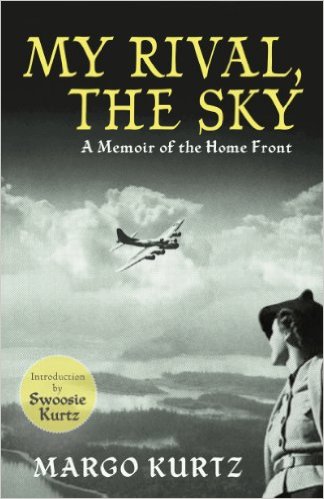
Margo's advancing dementia has changed both their lives, but she still has a remarkable grace about her. The poetic way she expresses herself now has the same lyric spirit that shines through in her memoir, My Rival, the Sky, published by Putnam in 1945 and rereleased as an ebook by Perigee last year.
Every time I see Margo, she's delighted to meet me, and I always tell her, "I read your book, Margo, and I really loved it. You're such a wonderful writer." She's always surprised and thrilled to hear it.
"You just made me so happy," she said last time I saw her. "And what do you do, darling?"
I told her, "I'm a writer like you."
"Oh, then you know," said Margo, "the way words come out of their cocoons."
Margo is still remarkably Margo, but her health and happiness, her longevity and everything that makes every day worth living, is a tribute to Swoosie's tender loving care. They both continue to inspire and amaze me.
So the Gare Bear and I have been married 32 years as of today. The first three words he said to me were "I love you," and I hope those will be the last three words I say to him. Words are my stock in trade, but I have none to express how truly grateful I am to have this beautiful, funny, intelligent man in my life.
Over the past three decades, we raised two children to responsible, dynamic adulthood. We've traveled the world together, negotiated the treacherous territory of cancer and chemotherapy, and lived together for several months on a fire tower almost entirely cut off from civilization. We've debated politics and fought over money. We keep gaining and losing the same 50 pounds. We're still into each other. Still onto each other. The only thing we're religious about is doing the New York Times crossword puzzle together every morning.
We don't have a good marriage; we are a good marriage.
This is a concept people who oppose marriage equality don't get. (Along with the concepts of civil rights, science, separation of church and state, and MYOFB.) As irritating as she is, I feel bad for their new patron saint, Kim Davis, the Kentucky county clerk being lauded for defying the Supreme Court decision to recognize the civil right of any legal adult to marry the legal adult with whom s/he feels at home. The concept of marriage Davis is supposedly championing doesn't include the kind of marriage Gary and I live in. Our marriage is not sacred to us because God said so; our marriage is sacred to us because we said so, and our public commitment to keeping it that way entitled us to the legal and financial benefits of marriage.
We had already been living together for a while before this delightful post-hippie nuptial be-in on a mountaintop, and in Montana circa 1983, we were legally married by common law from the time we opened a joint bank account, indicating our status as "married". Why the ceremony if we were already legally married? In fact, why be married at all, since we were doing fine living together? Back then, I had no logical or illogical answer. We had no clue what this marriage would turn out to be, but we felt it was something precious and important, and we wanted to reinforce and protect it--from the erosive power of time, from the corrosive power of insecurity, from the nattering of all the people who thought we didn't belong together, and from our own inevitable f**k-ups.
Now, 32 years hence, I see the accidental wisdom in that. I still can't quantify exactly what marriage means, but I know this isn't about one man and one woman--insert Tab A into Slot B--this is about One Gary and One Joni. He is who he is, I am who I am, and what we are together is We Are. There is no other marriage like ours, because every marriage is unique. That's part of what makes each marriage precious.
I'm fairly sure Kim Davis is not thinking of all this on any existential level; she just hates homos, as conveniently prescribed by the almighty god who was created for the convenience of haters. (As Gary succinctly put it when the whole thing started revving up, "She's not Rosa Parks. She's the bus driver.") Right now, she's riding this 15-minute wave of fame, a heady experience most dumpy, sullen bureaucrats can only dream of. But the irony of this particular person being chosen to champion the sanctity of marriage is like tin foil between the teeth of anyone who actually understands the true sanctity, the rarity, the inexpressibly precious stroke of luck and dint of industry that is a long, loving marriage.
I'm not saying she doesn't understand or respect marriage because she's never had a good one. I'm saying she doesn't understand or respect marriage because she doesn't understand or respect people. She doesn't understand or respect the scripture she spouts. She doesn't understand or respect the laws that govern the public office she holds. Marriage is way above her pay grade. All she does is sign the paperwork. If that makes her feel powerful, well, add that to the list of things she is bombastically wrong about.
At the end of the day, all the bloviating and grandstanding will come to nothing, and most Americans will accept what other first world citizens accepted a long time ago. Some people are gay. Get over it. If you truly believe that healthy marriages contribute to a healthy society, don't screw around on your spouse and shut up about the spouses of others.
Until that day, I think it's important for heterosexual couples who thrive in solid traditional marriages to keep speaking up for the civil rights to which all people are entitled. So here's me and the Grizz. My Gare Bear. The love of my life. My husband, for better or worse, till death do us part.
We believe in marriage. That's why we believe in marriage equality.
Jerusha rockin' it a la peacock
at Houston Pride 2015
My fabulous daughter, Jerusha Rodgers, spent the better part of two years traveling the world with nothing but her own ingenuity, a genuine desire to live in a yurt, and an income cobbled together from freelance editing and online essay grading.
My amazing dad, Del Lonnquist, scaled tall buildings and toured with a rock band in his youth. More recently, he cared for my mom as she was dying of Alzheimer's and then took to the road on his motorcycle-sidecar rig. He's since ridden tens of thousands of miles and, at age 80, earned his Iron Butt certification as one of the World's Toughest Riders.
In addition to the gene pool and our love for lefse, all three of us share a flare for the arts, an insatiable curiosity about what lies around the next bend, and an uncanny knack for combining the two in an unconventional lifestyle. What works for us may not work for everyone, but it does indicate that anyone can create an unconventional path that works for her/himself. It's about living by decision, being true to your authentic self, and focusing on giving and doing as opposed to getting and having.
Dad was up up and away, skydiving and hot air
ballooning to celebrate his 80th birthday
Jerusha had the brilliant idea to bring our peripatetic POV to SXSW Interactive 2016 in a three-generation panel: Brave YOU World: Create & Fund an Unorthodox Life. We need your vote to get on the SXSW roster!
Here's the official pitch:
Everyone knows exactly what they’d to do if X, Y and Z didn’t stand in the way, but how do people leap and trust a net will appear? For author and sidecar-biker Del Lonnquist, his daughter, NYT bestseller Joni Rodgers, and her daughter, freelance editor Jerusha, it was three perfect storms of adventurous spirits, necessity and a willingness to try new things. This generational panel discusses the pragmatic approach to exploring and combing disparate skills to develop, grow, and keep a creative career that makes every day the life you dream of. Two SXSW vets and a newcomer to the Texas stage know how to work the world—from frustrations to elations and making the most of things as they come.
On the flight over to Ireland this weekend, I was reading The Secret Rose, a strange and wonderful collection of stories by William Butler Yeats. One of the many lines that leapt off the page:
"...the dreamers who must do what they dream, the doers who must dream what they do."
The words find new context in Her Secret Rose by Orna Ross, the first in a trilogy of novels about young Willie Yeats and Maud Gonne, a British heiress, change agent, mystic seeker and champion of Irish civil rights.
Gonne was the muse that catalyzed Yeats' career as she became the object of his unrequited passion/obsession. Their political and personal lives were intimately entwined; they were kindred spirits, soul mates, and partners in a long journey of spiritual exploration that included mind-altering drugs and secret occult rituals.
But Maud had another life, another love, that Willie knew nothing about, and inevitably, the two worlds would collide. With great insight, wit, lyrical skill and deep-dive research, Orna Ross transports readers to an extraordinary moment in the history of Ireland and allows us to see it through the eyes of two people whose passion for justice and poetry changed the world.
Limited edition hardcover with Gyles cover design
As a literary artist and publishing industry revolutionary, Ross is a modern day dreamer and doer named twice to Bookseller's list of the 100 Most Influential People in publishing. In honor of the Yeats Sesquicentennial, she's created a special edition of Her Secret Rose bound in one volume with The Secret Rose by WB Yeats. The new limited edition hardcover features the spectacular original cover design created for The Secret Rose by Yeats' friend, artist Althea Gyles, and includes two stories the original publisher insisted on removing from the first edition, though Yeats intended them to be read as part of the collection.
I was thrilled to participate in this project as the editor of Her Secret Rose, and I'm in Ireland to celebrate the book's official launch tonight at the Yeats Memorial Building in Sligo.
I've spent the past few days tromping the green hillsides, exploring the ancient burial sites at Carrowmore, and eavesdropping on musical Irish dialog in the pubs. For me, this experience has been uniquely rich because the poetry and mystic prose of Yeats is resonating through it all. On a bus somewhere between Shannon and Knock, listening to the lively conversations of young and old people around me, I suddenly realized that the voice heard throughout this novel is the voice of Ireland. It's verdant and proud, with a unique melody, hard-won wisdom and wry humor.
I always loved the idea of Ireland. This book finally brought me here. I always loved the idea of Yeats, the firebrand poet. This book brought me to his life and work in a way that made it vibrant, meaningful and completely, timelessly relevant.
Can we set the controversy aside for a moment and just enjoy what a masterful writer Harper Lee is? I devoured Go Set a Watchman in one sitting this morning with just the right balance of laughs out loud and lumps in my throat. The Southern dialogue and character sketches are incredibly rich, astonishingly well done when you think how young she was. As I read, I grabbed screenshots of one great line after another, just so I could revisit and wallow in her wordsmithery.
A few of my favorites:
1) "The music instructor. He taught a course in what was wrong with Southern church music. He was from New Jersey. He said we might as well be singing 'Stick your snout under the spout where the gospel comes out' ..."
2) "A bigot. Not a big one, just an ordinary turnip-sized bigot."
3) "You've turned and tackled no less than your own tin god." [Apply as needed to swirling controversy.]
4) "If you wish to continue in darkness, that is your privilege." [I can think of so many uses for this one!]
5) "There's nothing like a blood-curdling hymn to make you feel at home."
6) "Hypocrites have just as much right to live in this world as anybody."
7) "Human birth is most unpleasant. It's messy, it's extremely painful, sometimes it's a risky thing. It is always bloody. So it is with civilization."
8) "Underwood, who in his time had published memorial verses of indeterminate variety, said he still couldn't publish this one because it was blasphemous and didn't scan."
9) "Prejudice, a dirty word, and faith, a clean one, have something in common: they both begin where reason ends."
10) "Oh dear. Oh dear me, yes. The novel must tell a story."
Bonus line to keep in your hip pocket for the right opportunity: "Aunty," she said cordially, "why don't you go pee in your hat?"