During the month of September, I embarked on the most challenging deadline I have ever accepted. So how am I doing? Here's the current scorecard:
42 Nightmares (give or take,) all related in some way to being late (to a class, final exam, flight to New York, or agreed-upon obligation to a now-furious friend. It doesn't take Freud to figure that out, but I've gotten to the point where I can laugh and say, "Enough already! I get it, Subconscious!"
1 Disappointed mother, since I've been forced to delay my visit to the East Coast for an extra month. She understands but can't resist the old guilt nudge (she's a master) at least once per week. I felt bad, too, especially when I found out what the changed ticket was going to cost me, but I wouldn't enjoy myself (and no one would enjoy my company) if I went before the book is finished.
5-12 Put-upon chapter members and blog teammates, as I've begged off other obligations for the times being.
743 dust bunnies, breeding in neglected house. Have resolved to hire someone but haven't yet made time to do so.
33,200 words (and change) of the 55,000 word project due on November 8th. Whew!
For the next month or so, I'll be chugging along like a certain little engine. Only at this point, I know I can! I know I can!
See ya on the downslope! Thanks for any positive thoughts!
Thursday, September 30, 2010

Wednesday, September 29, 2010
A writer of a certain age: Sue Miller talks about living a life that makes great books possible
Great interview with author Sue Miller on Boston University Today today, talking about her books and nudging folks out to her appearance at Metcalf Hall tonight. One thought that should encourage those of you who are out there reading, writing, and waiting. And waiting. And waiting for that breakthrough:
Looking back, did beginning your writing career at 35 make you a more perceptive, confident writer? Could you have written The Good Mother at 25?Read the rest here.
I certainly think I knew more about life and about writing when I was 35 than when I was 25—which was when I wrote my first, unpublished and unpublishable, novel. And I think I knew even more about both at 40, when I started writing The Good Mother, than I did at 35, when I wrote a second, not-so-bad-but-not-so-good novel. So while my career might have begun, in some sense, with the writing of The Good Mother, my apprenticeship began much earlier, and it was the combination of that apprenticeship with just having been alive longer that made The Good Mother possible.
Tuesday, September 28, 2010
I ((Heart)) Banned Books Week, starring the Top Ten Banned Books of 2009
 From the American Library Association website:
Banned Books Week (BBW) is an annual event celebrating the freedom to read and the importance of the First Amendment. Held during the last week of September, Banned Books Week highlights the benefits of free and open access to information while drawing attention to the harms of censorship by spotlighting actual or attempted bannings of books across the United States.The Top Ten Banned Books of 2009:
1. TTYL; TTFN; L8R, G8R (series), by Lauren MyracleI'm a little confused about the harmful effects of nudity in narrative form, but no more than I am confused by people who spend their time and energy trying to ban books. And people who think a realistic, non-threatening portrayal of a functional homosexual couple is somehow worse than war, the Saw movies, on-screen autopsies, and/or Judges 19...which might lend a modicum of perspective to ban-happy homophobes.
Reasons: Nudity, Sexually Explicit, Offensive Language, Unsuited to Age Group, Drugs
2. And Tango Makes Three by Peter Parnell and Justin Richardson
Reasons: Homosexuality
3. The Perks of Being A Wallflower by Stephen Chbosky
Reasons: Homosexuality, Sexually Explicit, Anti-Family, Offensive Language, Religious Viewpoint, Unsuited to Age Group, Drugs, Suicide
4. To Kill A Mockingbird by Harper Lee
Reasons: Racism, Offensive Language, Unsuited to Age Group
5. Twilight (series) by Stephenie Meyer
Reasons: Sexually Explicit, Religious Viewpoint, Unsuited to Age Group
6. Catcher in the Rye by J.D. Salinger
Reasons: Sexually Explicit, Offensive Language, Unsuited to Age Group
7. My Sister’s Keeper by Jodi Picoult
Reasons: Sexism, Homosexuality, Sexually Explicit, Offensive Language, Religious Viewpoint, Unsuited to Age Group, Drugs, Suicide, Violence
8. The Earth, My Butt, and Other Big, Round Things by Carolyn Mackler
Reasons: Sexually Explicit, Offensive Language, Unsuited to Age Group
9. The Color Purple Alice Walker
Reasons: Sexually Explicit, Offensive Language, Unsuited to Age Group
10. The Chocolate War by Robert Cormier
Reasons: Nudity, Sexually Explicit, Offensive Language, Unsuited to Age Group
Monday, September 27, 2010
Houston friends! Join us for the "Promise Me" event at B&N Champions on Friday!

Meet Nancy Brinker for a celebration and book signing!
Friday October 1 at 7:00 PM
Barnes & Noble Champions
5303 FM 1960 West
Houston, TX 77069
And walk with Nancy and the dynamic volunteers of our Houston affiliate in the Race for the Cure on Saturday, October 2!!
Sunday, September 26, 2010
Writing in the Hurting Places
The semester is in full swing at both UHCL and the prison, which is why you haven't heard from me much lately. No matter what I'm teaching, my students never fail to make me laugh, make me cry, and make me think. And sometimes, when I think I'm all caught up, I go to my email and find sudden little gems like this:
Consider Alice Sebold's experience with The Lovely Bones and Lucky. She started working on The Lovely Bones, but had to write Lucky first to get her own experience out of the way before she could do justice to Susie Salmon's. She, like most of us, had something she had to process before she could open her ears and listen fully to another character. And yet so much of Sebold's own rape experience resonates through Susie's. There's a strong connection there, and I don't think that powerful, influential novel could have been written by anyone else.
It's been like that for me, too. When I was 11, I was sexually assaulted, and, for a long time, my work was about sexual abuse in some way. Eventually, I grew past that, and although my current novel is also about abuse, it's a lot further from my own experience than my first short stories were or my most recent full-length play. Although based on harrowing medical narratives and psychiatric case studies, the story itself is not my own. It's a good thing. I don't think I could write this if I'd actually gone through it. But I also don't think I could write it if I hadn't gone through what I went through, and experienced the same common feelings of powerlessness. I know what it's like to be afraid for my life and to have that fear go completely unrecognized. I know what it's like to suffer at the hands of an abuser and not be able to talk about it. And those are the common emotions I draw on when I write my fiction, even though it means I'm constantly "breaking open." But what I've realized, just this week, is that a thing of beauty can come from a place of horror, and that fear and anger can give birth to joy.
My heart goes out to this student. I know she's hurting. I know she's afraid. But I hope that in the hurting places, she can go deep and find something that transcends--herself, her experience, her art.
Have you ever used your really personal experiences in your art? And if so, how did you get through it? The piece I'm working on now has me absolutely scared out of my wits.My first response, before writing back, was to feel an immediate connection to the writer, a female student in her early 20s. My second response, as I started typing, was this:
The short answer is yes. The long answer, I'll have to chew on. I may write a blog post on it, because it's definitely food for thought. Something else I'd say is that you'd have to write through that fear. Either that, or wait until you've processed the experience more and then come back to it with a little more distance. That said, almost all of my writing has dealt, to some degree, with traumatic experience. The main thing to keep in mind is that if you are ready to work in the place that is raw, the work can be a powerful experience. It will transform you and others.My third response, via this blog, is that if you're ready to write in those painful places, that you have to be, as Natalie Goldberg says in Wild Mind, "willing to break open." If you're not ready for that yet, then perhaps you need to have more distance, or you need to write your own story first, before transforming it or fictionalizing it.
Consider Alice Sebold's experience with The Lovely Bones and Lucky. She started working on The Lovely Bones, but had to write Lucky first to get her own experience out of the way before she could do justice to Susie Salmon's. She, like most of us, had something she had to process before she could open her ears and listen fully to another character. And yet so much of Sebold's own rape experience resonates through Susie's. There's a strong connection there, and I don't think that powerful, influential novel could have been written by anyone else.
It's been like that for me, too. When I was 11, I was sexually assaulted, and, for a long time, my work was about sexual abuse in some way. Eventually, I grew past that, and although my current novel is also about abuse, it's a lot further from my own experience than my first short stories were or my most recent full-length play. Although based on harrowing medical narratives and psychiatric case studies, the story itself is not my own. It's a good thing. I don't think I could write this if I'd actually gone through it. But I also don't think I could write it if I hadn't gone through what I went through, and experienced the same common feelings of powerlessness. I know what it's like to be afraid for my life and to have that fear go completely unrecognized. I know what it's like to suffer at the hands of an abuser and not be able to talk about it. And those are the common emotions I draw on when I write my fiction, even though it means I'm constantly "breaking open." But what I've realized, just this week, is that a thing of beauty can come from a place of horror, and that fear and anger can give birth to joy.
My heart goes out to this student. I know she's hurting. I know she's afraid. But I hope that in the hurting places, she can go deep and find something that transcends--herself, her experience, her art.
Saturday, September 25, 2010
Two Thrillers for the Price of...Free!
Hi, all,
First of all, thanks to all of you who help spread the word about the free download of my RITA-nominated romantic suspense TRIPLE EXPOSURE for Kindle. The book landed at #1 on both the free and paid (once the promotion ended) bestseller lists, and I couldn't be more thrilled!
I've been so swamped with deadlines lately, I've been missing blog dates left and right, so I'm trying to make up for in with a very special contest over at eHarlequin, where I'll be celebrating special book buddies by giving away two identical signed copies of any one title from my backlist, one for the lucky commenter, and a second to share and discuss with a friend.
If you'd like to enter or just say hi, please drop by the e-Harlequin blog for your chance to win!
Thanks!
First of all, thanks to all of you who help spread the word about the free download of my RITA-nominated romantic suspense TRIPLE EXPOSURE for Kindle. The book landed at #1 on both the free and paid (once the promotion ended) bestseller lists, and I couldn't be more thrilled!
I've been so swamped with deadlines lately, I've been missing blog dates left and right, so I'm trying to make up for in with a very special contest over at eHarlequin, where I'll be celebrating special book buddies by giving away two identical signed copies of any one title from my backlist, one for the lucky commenter, and a second to share and discuss with a friend.
If you'd like to enter or just say hi, please drop by the e-Harlequin blog for your chance to win!
Thanks!
Friday, September 24, 2010
People of the Book
This morning, I was reading this moving post by a co-worker of the recently-departed bookseller David Thompson of Murder by the Book, who shares how David's death has taught him to take pride in the career he was once embarrassed to bring up at cocktail parties. "Just a bookseller," he called it.
Just a bookseller? No way, says this author and lifelong reader, remembering so many wonderful conversations and fabulous recommendations from extraordinary booksellers I have met over the years. Like the librarian who turns a child onto the perfect "gateway" horse story, the grade school teacher who smiles and nods when his students beg him to read "just a few more pages" from a chapter book they're sharing, the mothers and fathers who cuddle their toddlers and read Goodnight Moon for the hundredth time, these are the people who induct us into the tribe of readers, who take us by the hand and introduce us to the miracle of story, with its magical power to carry us away and allow us to live richer lives experienced through so many fascinating characters.
This Friday, I am so thankful to all the people of the book. Not only the authors, illustrators, editors, agents, publicists, and so many others employed in their creation, sales, and distribution but those who share a story just because it touched them. Those who share a gift that can forever wrap its arms around us and carry us away from stress and loneliness and worry, carry us beyond our singular existence and make us into missionaries for the books we love as well.
Who do you remember turning you on to great stories? Tell us about the teachers, the booksellers, the librarians, mothers, and so many others who kindled your passion for the written word. We would love to hear from you.
Just a bookseller? No way, says this author and lifelong reader, remembering so many wonderful conversations and fabulous recommendations from extraordinary booksellers I have met over the years. Like the librarian who turns a child onto the perfect "gateway" horse story, the grade school teacher who smiles and nods when his students beg him to read "just a few more pages" from a chapter book they're sharing, the mothers and fathers who cuddle their toddlers and read Goodnight Moon for the hundredth time, these are the people who induct us into the tribe of readers, who take us by the hand and introduce us to the miracle of story, with its magical power to carry us away and allow us to live richer lives experienced through so many fascinating characters.
This Friday, I am so thankful to all the people of the book. Not only the authors, illustrators, editors, agents, publicists, and so many others employed in their creation, sales, and distribution but those who share a story just because it touched them. Those who share a gift that can forever wrap its arms around us and carry us away from stress and loneliness and worry, carry us beyond our singular existence and make us into missionaries for the books we love as well.
Who do you remember turning you on to great stories? Tell us about the teachers, the booksellers, the librarians, mothers, and so many others who kindled your passion for the written word. We would love to hear from you.
Thursday, September 23, 2010
Buy This Book: The Four Things That Matter Most by Ira Byock
I'm heading for Austin today to interview Dr. Ira Byock for an upcoming article in Prevention Magazine. A good omen: just before the editors contacted me about doing the article, I'd downloaded The Four Things That Matter Most: A Book About Living on my Kindle. When I spoke to Ira on the phone yesterday to set up logistics, I was glad to find that the warmth and wisdom in this book was completely present in his voice. He's a fascinating person doing controversial but incredibly important work in the field of palliative care and end of life issues.
From the flap:
Four simple phrases -- "Please forgive me," "I forgive you," "Thank you," and "I love you" -- carry enormous power. In many ways, they contain the most powerful words in our language. These four phrases provide us with a clear path to emotional wellness; they guide us through the thickets of interpersonal difficulties to a conscious way of living that is full of integrity and grace...
The inspiring stories in The Four Things That Matter Most demonstrate the usefulness of the Four Things in a wide range of life situations. They also show that a degree of emotional healing is always possible and that we can experience a sense of wholeness even in the wake of family strife, personal tragedy, divorce, or in the face of death. With practical wisdom and spiritual punch, The Four Things That Matter Most gives us the language and guidance to honor and experience what really matters most in our lives every day.
on my Kindle. When I spoke to Ira on the phone yesterday to set up logistics, I was glad to find that the warmth and wisdom in this book was completely present in his voice. He's a fascinating person doing controversial but incredibly important work in the field of palliative care and end of life issues.From the flap:
Four simple phrases -- "Please forgive me," "I forgive you," "Thank you," and "I love you" -- carry enormous power. In many ways, they contain the most powerful words in our language. These four phrases provide us with a clear path to emotional wellness; they guide us through the thickets of interpersonal difficulties to a conscious way of living that is full of integrity and grace...
The inspiring stories in The Four Things That Matter Most demonstrate the usefulness of the Four Things in a wide range of life situations. They also show that a degree of emotional healing is always possible and that we can experience a sense of wholeness even in the wake of family strife, personal tragedy, divorce, or in the face of death. With practical wisdom and spiritual punch, The Four Things That Matter Most gives us the language and guidance to honor and experience what really matters most in our lives every day.
Wednesday, September 22, 2010
"Promise Me" hits the NYT bestseller list with a big pink sledgehammer!
Just heard that Promise Me will debut in the top 10 on the NYT list next week. And we scored a terrific review in the LA Times: "Brinker's candid memoir weaves in tales of a loving family with her triumphant push to deliver a deathbed vow made to her sister, Suzy Komen. It's quite a story, told by quite a character."
I'm pretty much doing this today:
Congratulations and love to the fabulous Nancy G. Brinker! It was a privilege to be your book sherpa. Houston peeps! Don't miss the celebration and signing Friday, October 1, 7:00 PM at Barnes & Noble Champions!
I'm pretty much doing this today:
Congratulations and love to the fabulous Nancy G. Brinker! It was a privilege to be your book sherpa. Houston peeps! Don't miss the celebration and signing Friday, October 1, 7:00 PM at Barnes & Noble Champions!
From "The Figure of the Youth as a Virile Poet" by Wallace Stevens

"...when we look at the blue sky for the first time, that is to say: not merely see it, but look at it and experience it and for the first time have a sense that we live in the center of a physical poetry, a geography that would be intolerable except for the non-geography that exists there--few people realize that they are looking at the world of their own thoughts and the world of their own feelings."
(Brought to my attention by my bookish daughter and shared in celebration of driving around with the top down today.)
Tuesday, September 21, 2010
3 Qs for Benjamin Percy, author of "The Wilding"
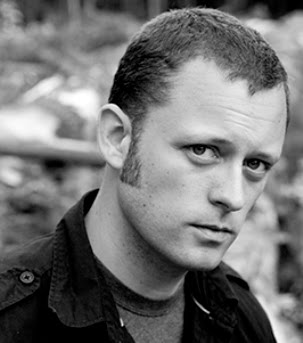
 stops by for a quick 3Qs.
First, Benjamin, how are you? The debut novel head trip has its ups and downs, but the book is getting fantastic reviews, and that's got to help. Does it feel pretty fierce to be Benjamin Percy right now?
I'm kind of twitchy right now. I've been pacing around, chewing on my hand, hitting the gym and throwing around weights, my body all tangled up with hope and dread and excitement and nervousness. I'm of course deeply grateful for the positive reviews. This is a book I spent years building -- hidden away in my office -- and now it's out the door , out there in the world, and to discover that it's been positively received means the world. I can't wait to get out to the bookstores and festivals, shoot the bull with people about the novel.
Antonya Nelson so perfectly describes this novel as a "tour de force meditation and treatise on the nature of violence, the violence of nature, man in the wild, and the wild in man-cleverly disguised as a page-turning adventure." Which unfolded first as the novel took shape in your head, the powerful theme or the ass-kicking storyline?
I never begin with a theme in mind. Instead it's images, characters, voices -- that's what draws me into the mist. With short fiction, sometimes I don't know what the story is ABOUT for days. With a novel, it takes much longer. Months. Which is a good thing. Because if a writer begins a story thinking, "This is going to be about how awful/good gun control is," then the narrative will feel hollow and manipulative, the characters like puppets with an after school special agenda. That might be the way an editorial is written -- but not fiction. It's much more organic, a process that begins with instinct and ends with thoughtfulness. The short answer: ass-kicking storyline.
Justin Caves is one of those characters we alternately want to go to war with, buy a beer for, and smack upside the head. Tell me the one thing you really hope readers will get about this character.
I wanted him to be complicated, emotionally knotty. I wanted the reader to feel uncertain about him. And by the end, the guy you thought was the hero turns out to be something of a villain.
Bonus Q, if I may: What are you reading?
The Lonely Polygamist
 by Brady Udall, my friend and former teacher.
Subscribe to:
Posts (Atom)