Saturday, November 17, 2012
Happy Birthday, Scorsese! (Brilliant "Goodfellas" steady cam scene)
One of my all-time favorite movie scenes. Simply brilliant down to the tiniest detail.

Thursday, November 15, 2012
Emily St. John Mandel's LAST NIGHT IN MONTREAL


 Gorgeous writing, irresistible scavenger hunt of a story
Up to my eyes in research, rough writing, and revisions on a work in progress, I have absolutely no time for pleasure reading right now. So it was a huge mistake to allow even a passing glance at an advance copy of Emily St. John Mandel's lovely debut novel, Last Night in Montreal. I can't help it; I am about to utter the hacky cliche of all book recommendations: I couldn't put it down. The words "pleasure reading" hardly begin to describe it. This was somewhere between a spa treatment and mid-day lovemaking. It's a mystery and a love story, a twisting path through the heart and mind of a richly drawn character.
This is not the blockbuster you're going to see on an endcap at Borders, but I hope hope hope it catches on with book clubs. There's so much fertile ground for discussion here, and this talented author deserves the affirmation.
Originally posted on Amazon.com as Joni L. Rodgers
Astonishing plastic art rescued from the flotsam
Richard Lang and Judith Selby Lang of San Francisco’s Electric Works gallery have created an astonishing array of sculptures, installations and sundry objet d'art from bits and pieces of plastic debris they've collected on Kehoe Beach in Point Reyes, California.
"We're not cleaning the beach. We're curating the beach."
Wednesday, November 14, 2012
Tuesday, November 13, 2012
Raymond Chandler's THE BIG SLEEP

 Chandler is the master
There is something transporting about this book. The relentless rain. The over-the-top blondes. The hats always have some angle, whether they're cocked on top of a fashionable fairy or parked on a telephone receiver.
"If the mystery novel is at all realistic (which it very seldom is) it is written in a certain spirit of detachment; otherwise nobody but a psychopath would want to write it or read it," Chandler wrote in his essay "The Simple Art of Murder". "The murder novel has also a depressing way of minding its own business, solving its own problems and answering its own questions." (Hence the rain, maybe. It keeps the head down, the shoulders hunched, the collar up.) Okay, good to know, but more importantly, The Big Sleep corrected my mistaken belief that the detective/murder/mystery novel is all about plot. It isn't. Not when it's done right.
Originally posted on Amazon.com as Joni L. Rodgers
Agent-Author Lois Winston Dishes on Top Ten Reasons Your Novel Is Rejected
Whether you've been looking to break into publishing or you've grown frustrated with rejections and want to "bulletproof" a future submission, you might want to check out this offering from someone with a unique perspective. Award-winning crafting mystery, romantic suspense, romance, and humorous women's fiction author and (in her other life) literary agent (with the Ashley Grayson Literary Agency) Lois Winston has a brand new e-book designed to guide you around the most common pitfalls.
 BtO: Thanks so much for visiting Boxing the Octopus, Lois! We're delighted to have you here.
Since I've known Lois for years, mostly as a fellow author, and respect her opinion on publishing matters, I asked her to stop by the blog today to answer a few questions about Top Ten Reasons Your Novel Is Rejected and How to Avoid Them. (Click the link to find buying links for all e-book platforms.)

First question: I've known a number of agents who are also (sometimes pseudonymously) published authors. Which came first for you, and how has one career impacted and informed the other?
LW: Thanks so much for inviting me to be your guest today, Colleen. What most writers don’t realize is that there are quite a few agents and editors who are also published authors. The majority of them write under pseudonyms, sometimes closely guarded pseudonyms, an option not available to me since I sold prior to becoming an agent.
After selling my first book in 2005 (Talk Gertie To Me, now available as an e-book,) I was invited to join the agency that reps me. For several years prior to selling, I was receiving rejection letters that had nothing to do with the quality of my writing. My manuscripts were the victims of circumstance – lines being cancelled, editors leaving, similar books having just been purchased, marketing unsure how they could sell the book, etc. At the same time, I was helping friends rewrite their proposals, and they’d go on to sell their manuscripts after revising according to my input. My agent recognized that I have a talent for identifying what works and what doesn’t work in manuscripts, and that talent could be advantageous to the agency.
BtO: How has one career impacted and informed the other?
LW: For one thing, I think I have a unique insight into publishing, given my seat on both sides of the table. Having received my share of rejection letters, I know what it feels like. However, I now have a better understanding of the business side of publishing and how the rejection process is never personal but always motivated by business decisions. Writing is very emotional, but publishing is always ruled by the bottom line.
BtO: How did you come to write Top Ten Reasons?
LW: I’ve been giving online workshops, writing articles, and presenting programs at conferences and to writing groups for over six years. I also teach continuing education courses on writing. Many of my students and workshop attendees have urged me to make my workshops available in book form. With the phenomenal sales of e-readers over the past couple of years and the availability of indie publishing, I finally decided the time was right to heed their advice. I chose to begin with Top Ten Reasons Your Novel Is Rejected because it’s been my most popular workshop.
BtO: I know that manuscript evaluation is highly subjective, but can you share just a few common problems that will immediately land a submission in your rejection pile?
LW: Well, that’s what my book is all about. However, I will give you one example: too many writers open their books with page after page of back-story and description instead of with a dynamic opening that grabs a reader’s attention and makes him or her want to keep turning the pages. Filler is deadly, and I see way too much filler in submissions.
BtO: Is there one "simple" fix you'd like to pass along?
LW: Other than to read my book?
BtO: Thank you so much for the helpful responses. I'll definitely be recommending your book at my next workshop. But I can't let you go without sneaking in the traditional BtO bonus question. What're you reading for pleasure these days?
LW: Thanks to Hurricane Sandy, I was without power for going on nine days. With no computer access, I couldn’t work. So I whittled down my TBR pile as long as I had daylight streaming in through my windows. I read Melinda Leigh’s Midnight Exposure, Shelley Freydont’s Foul Play at the Fair, and Julie Hyzy’s Buffalo West Wing. Now that the power is back on, I’m playing catch-up and won’t have time for any further pleasure reading for a few weeks.
Friday, November 09, 2012
Why I'm supporting the Bald Ambition Kickstart (and I hope you will too!)

When my memoir, Bald in the Land of Big Hair, was originally published by Harper Collins in 2001, I never imagined that this funny little book by a nobody novelist would take on a quietly powerful life of its own. Over the years, BLBH has been condensed by Reader's Digest, excerpted in Good Housekeeping, translated and published around the world. In 2011, with the paperback still in print from HC, I independently released the 10th anniversary ebook edition with a forward from the wonderful Elizabeth Berg and an update on me and my family.
Now the hilarious and heart-wrenching one-woman show adaptation by actress Lisa Hamilton is headed for an off-Broadway debut. And she needs your help. Not a lot of help. Just a little. As she says in her Kickstarter video below, "I want your beer money." With just 3 days left in her Kickstarter campaign, $20 each from fewer than 100 people would get her to her goal.
Lisa Hamilton's script remains impeccably true to my original text. Impressed by her passion and in awe of her talent, I gave her permission to run with it. I've never asked for or received a dime from the production of this show. I'll receive no portion of donated funds and no royalties for the New York workshop production.
This book was never about money for me; it was about message.
That's why I released the ebook independently: I wanted to keep the price low, making it accessible to as many readers as possible. And that's why I'm pricing the 10th Anniversary Ebook Edition of Bald in the Land of Big Hair at $.99 on Kindle this weekend only: to draw attention to the final weekend of Lisa's Kickstarter campaign and thank everyone who's supported her by chipping in and spreading the word on Facebook, Twitter and beyond.
Seeing Lisa's show for the first time was one of three mind-blowing moments when I realized this book is no longer about me.
About five years ago, I received a long, heart-wrenching email from a Wall Street executive whose daughter, like me, was diagnosed with lymphoma as a young mom. He told me she'd read Bald in the Land of Big Hair and copied bits and quotes from it on Post-It notes that peppered her bathroom mirror, bulletin boards and refrigerator.
"She wanted to talk to me about what she was going through," he said, "but I wanted to keep up that damn stupid positive attitude."
Frustrated, she'd told him, "If you ever want to know, read this book."
She always took it with her when she checked into the hospital, so she had it with her that week, but she suddenly lost ground and slipped into unconsciousness. Her father took the book from her bag, pulled his chair close to her bed and read through the long last night of his daughter's life. Now it was morning. "They say it'll be another hour or two," he told me.
He said he felt compelled to email me because he'd missed his opportunity to talk to her, but now he felt as though he'd laughed and cried with her, that he'd shared in her journey, and that on some level, she knew it, because she knew he would eventually read the book. "Thank you," he said, "for giving me a way to reach her."
A few years later, I spoke at a large survivorship event and was signing books afterward. As I did my best to hug and listen to each person in the long line, a woman came forward with a hardcover first edition copy of BLBH, and opening to the title page, I saw that I had signed it ten years earlier: "To my sister in survivorship. Shalom and Joy, Joni Rodgers."
The binding was broken, the dust jacket tattered and coffee-stained, and leafing through the worn pages I could see that the well-worn book had been passed from that original reader to a sister, to a friend, to a daughter, to a book club mate, to a neighbor, to a chemo buddy, to one woman after another, and each of them had added notes and highlights in a host of different handwriting, pens and pencils. The book had become a conversation, two dozen voices chiming in love and support, sharing hopes and fears, giving in to the laughter and tears.
I'd launched this little paper sailboat a decade earlier. Readers were the wind and water that carried it literally around the world and back to me, and though it was a profound privilege to have in my hands again for that brief moment, I had to send it on its way. It didn't belong to me.
Seeing Lisa Hamilton's adaptation of BLBH, witnessing what it meant to that audience, I was stricken again with the realization that this isn't the story of me; it's the story of every person's inevitable crucible moment in life. Lisa's show takes it to that level, using my words to create an entirely new work of art, and everyone who sees it, each in his or her own way, will make it their own.
I hope you'll take a moment to watch this short video about the NYC workshop production and pony up that beer money, sending the story on its way.
Joanna Weiss' MILKSHAKE


 Funny, smart and refreshing!
I thoroughly enjoyed this smart, funny, fast-paced novel. The characters are bright and engaging, the dialogue is zingy and true, and for those of us who tend to take ourselves a little too seriously when it comes to personal choices and political stands, it's a friendly but incisive calling out. A terrific debut from a talented author!
Originally posted on Amazon.com as Joni L. Rodgers
Harlequin Intrigue vs. Harlequin Romantic Suspense
I've been asked a number of times about the differences between the two lines I've written for: Harlequin Intrigue and Harlequin Romantic Suspense.

 2. Harlequin Romantic Suspenses run from (70-75K) which gives more space to develop characters, including secondary characters. The character development, emotional/internal conflict, and developing romance receive more emphasis, though a suspenseful story is important, too. There's less emphasis on the procedural investigation and more on how events are impacting character growth/change, in my opinion. They love cowboys here, too, but there's perhaps a broader range of hero types, and family drama is very popular. (My November release, Passion to Protect, is the story of a wounded wilderness--hotshot--firefighter who's been carrying a torch for his first love, who married the wrong man. Battered but determined, she returns home, but is forced to rely on the hero to help her save her family from a devastating fire...and an even greater threat.) Can you see how these two stories differ?
As their senior editors, Denise Zaza (Intrigue) and Patience Bloom (HRS) tell prospective writers in their linked Q&A chat, the two lines are definitely not interchangeable.
In a nutshell, I'll summarize what they're saying, adding in some examples from my own experiences:
1. Intrigue is a bit shorter (65-70K), more focused on the criminal investigation/procedural aspect of crime solving, and extremely "hero-centric." The more alpha the male is, the better. The romance element is less predominant than the intrigue focus, sensuality may vary but must be fully integrated with the crime plot, and love scenes receive less emphasis, if they're in the book at all. (My most recent Intrigue, Relentless Protector, involves a very suspenseful hunt for the heroine's missing five-year-old, and I can tell you, she was *not* in the mood, though there is definitely a developing romance with the hunky ex-Army Ranger hero whose wartime experience contributed to her late husband's death.) One or both of the protagonists is usually (though not always) involved in a higher-risk career, i.e. police, special ops/other military, private investigator. And cowboy heroes are very popular, though there are certainly other (alpha, Alpha, ALPHA!) types.
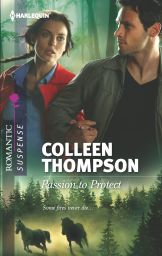

A lot of these differences will ultimately boil down to the individual author's voice and storytelling emphasis. I started out writing Intrigues, which I still love, but my stories have gravitated more toward more emotional/family-oriented suspense, which has landed me squarely in Harlequin Romantic Suspense territory (which, I'll admit, is my favorite line to read. Don't tell! ;) By reading many examples from each line, you'll get a better feel for what the editors are looking for. And both are actively acquiring new authors, so best of luck to you!
Thursday, November 08, 2012
Tuesday, November 06, 2012
Trailer Park: SUGARLAND by Joni Rodgers
In this modern retelling of the Psyche and Eros myth, two Texas sisters rebuild their lives and relationships in the wake of a violent betrayal.
Monday, November 05, 2012
Remember, remember the 5th of November
Valerie's letter from "V for Vendetta" written by Alan Moore
"I shall die here. Every last inch of me shall perish. Except one. An inch. It's small and it's fragile and it's the only thing in the world worth having. We must never lose it, or sell it, or give it away. We must never let them take it from us."
Subscribe to:
Posts (Atom)